
Project Planner
Turn the compliance work you already know about into a plan with owners, dependencies and dates.
Build an implementation plan from selected standards, gap analysis and open actions. See it as a timeline, a board or a mindmap, with dependencies that recalculate.
Build an implementation plan from the work you already know about
A compliance programme rarely starts from nothing. A project can be seeded from the standards you have selected, from the gaps an analysis found and from actions already open, or it can start empty when you would rather build it yourself.
What you get is a plan with phases, owners, milestones and dependencies, and three ways to look at the same project depending on the conversation you are having.
What it looks like
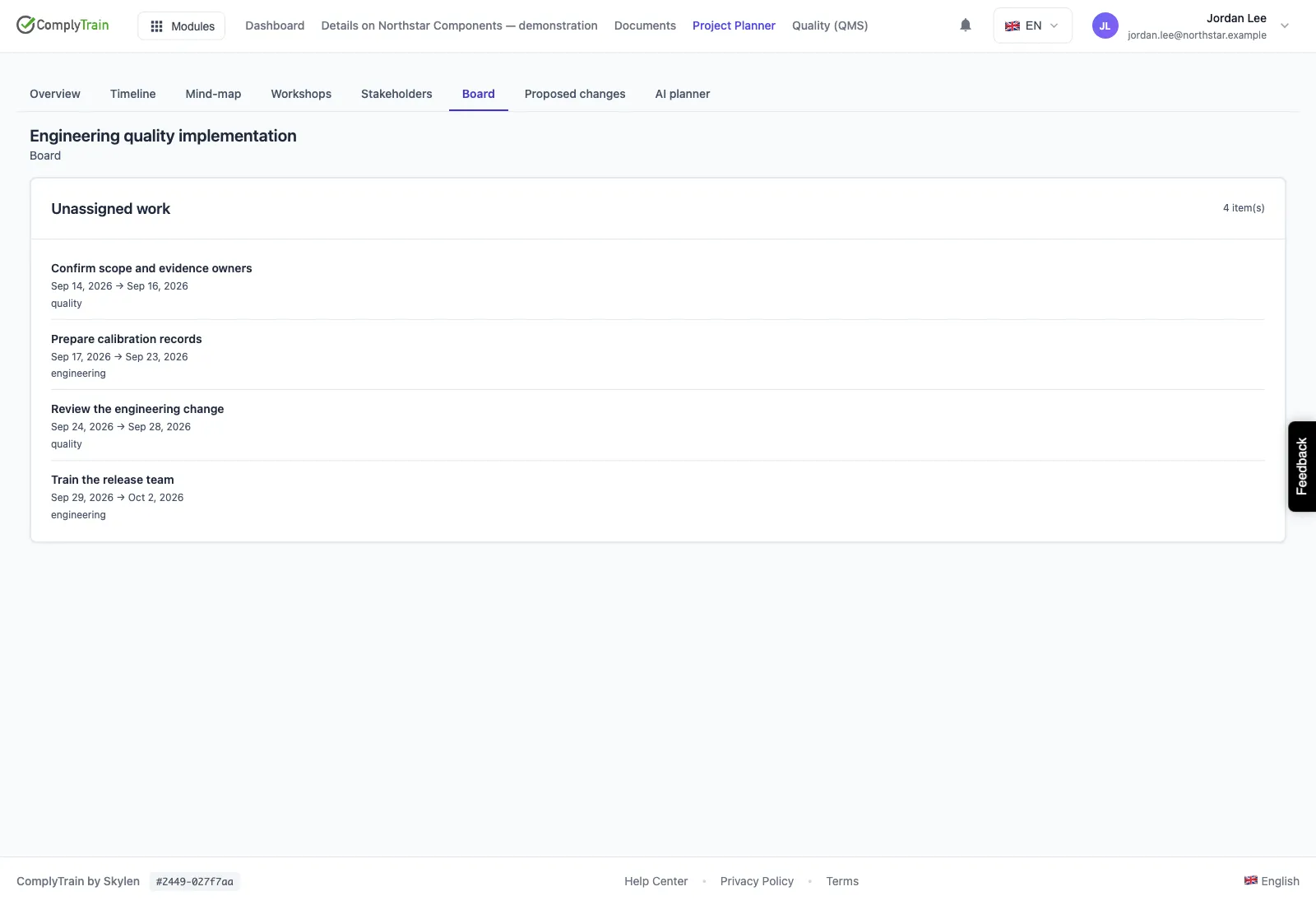
Review the work and the roles needed to deliver the plan, on a board that stays readable when the plan is long.
Use cases
Stand up a certification programme
Selected standards and a gap analysis seed the project, so the plan starts from the work that is genuinely outstanding rather than from a template.
Run the planning workshop from the plan
Participants and preparation sit with the project, and what the session agrees becomes a reviewed revision rather than a separate document.
Keep a moving plan honest
A baseline records what was agreed. When dates move, the difference is visible instead of quietly absorbed.
One plan, three ways to read it
Started from work you already have
Start from selected standards, gap analysis and open actions rather than from a blank project.
Timeline and dependencies
A day-zero start, durations, dependencies and milestones, with the schedule recalculated when something moves.
Board and mindmap
The same project as a board for delivery conversations and a mindmap for structuring the work.
Workshops
Participants and preparation held with the project, so a planning session starts from the current plan.
Reviewed revisions
AI can propose a revision. It is a proposal: a person decides, and the decision is recorded.
Baselines
Keep the plan you agreed alongside the plan you are working, so change is visible rather than silent.
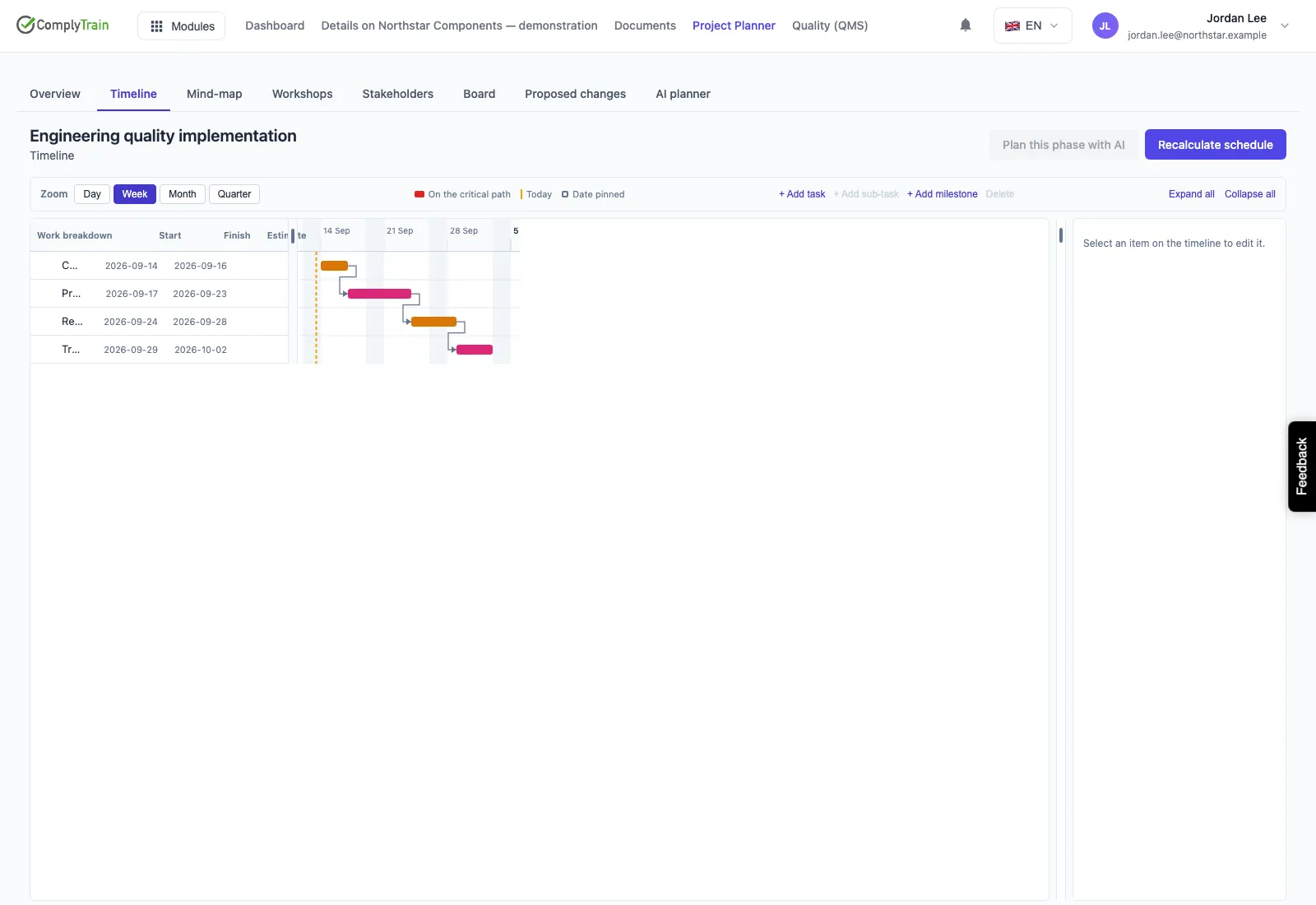
Timeline
See the schedule and what depends on what
The timeline runs from a day-zero start date and lays out durations, dependencies and milestones, recalculating the schedule when a task moves. That is what turns a list of work into a plan you can commit to.
Moving an item in the plan changes the plan. It does not reach back and rewrite the dates on the source records the work came from, and keeping those separate is deliberate: a planning decision and a change to a controlled record are different acts.
- Day-zero start, durations, dependencies and milestones
- Schedule recalculated when work moves
- Plan dates kept distinct from the source records' own dates
- Baselines, so an agreed plan stays comparable to the working one