
Quality management
Follow the problem through to a fix someone verified
Containment, structured root-cause analysis, owned corrective and preventive actions, and an independent verification step before anything closes. Completing an action and proving it worked stay two different acts.
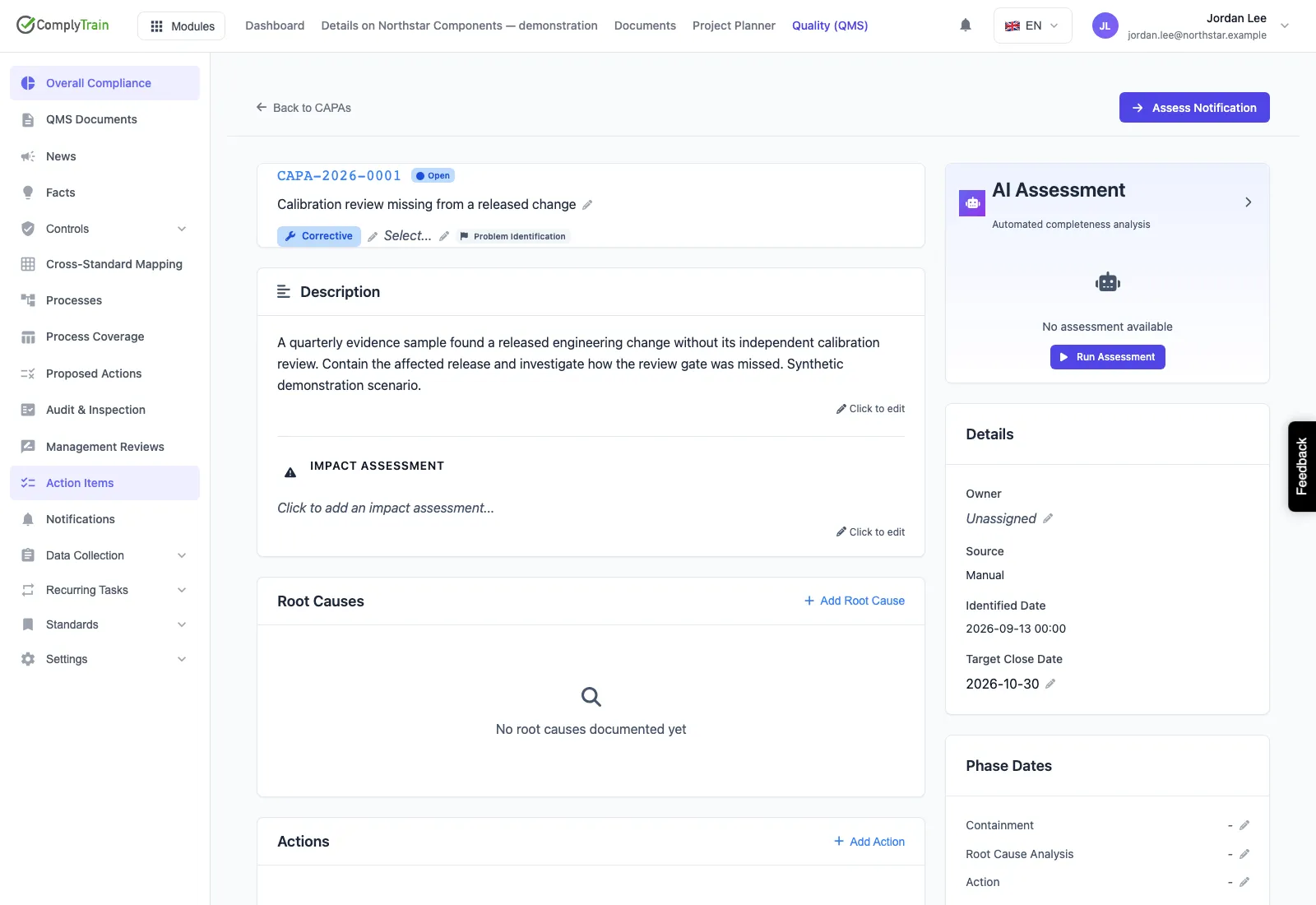
The CAPA record
A record, not a task with a label on it
Each corrective and preventive action carries its source, a structured root-cause analysis, typed containment, corrective and preventive actions, the evidence behind them, and its full history. Severity sets the clock, so a critical issue gets a tighter containment and analysis deadline automatically.
The record above is in its initial workflow stage, which is what a CAPA looks like on the day it is raised. Closure comes later and only through the gates your own procedure defines.
- 5 Whys, Fishbone and other structured methods, not a free-text box
- Containment, corrective and preventive actions typed and owned separately
- Independent verification by a second person before closure
- Readiness warnings, with an override reason recorded when one is taken
Why a CAPA closes here and not before
Structured analysis
Root cause is worked through a method, so the answer is defensible rather than the first plausible story.
Two people, two acts
Completing an action and verifying it are separate steps by separate people. "We finished it" cannot stand in for "someone checked it worked".
Gated closure
A CAPA cannot close until it has passed the evidence, sign-off and review your procedure demands.
Severity sets the clock
A critical issue inherits tighter containment and analysis deadlines without anyone setting them.
Effectiveness review
Verification and effectiveness are tracked apart, so a fix that stopped working is visible.
AI proposes, a person commits
AI can suggest a root cause or an action. It never commits one.